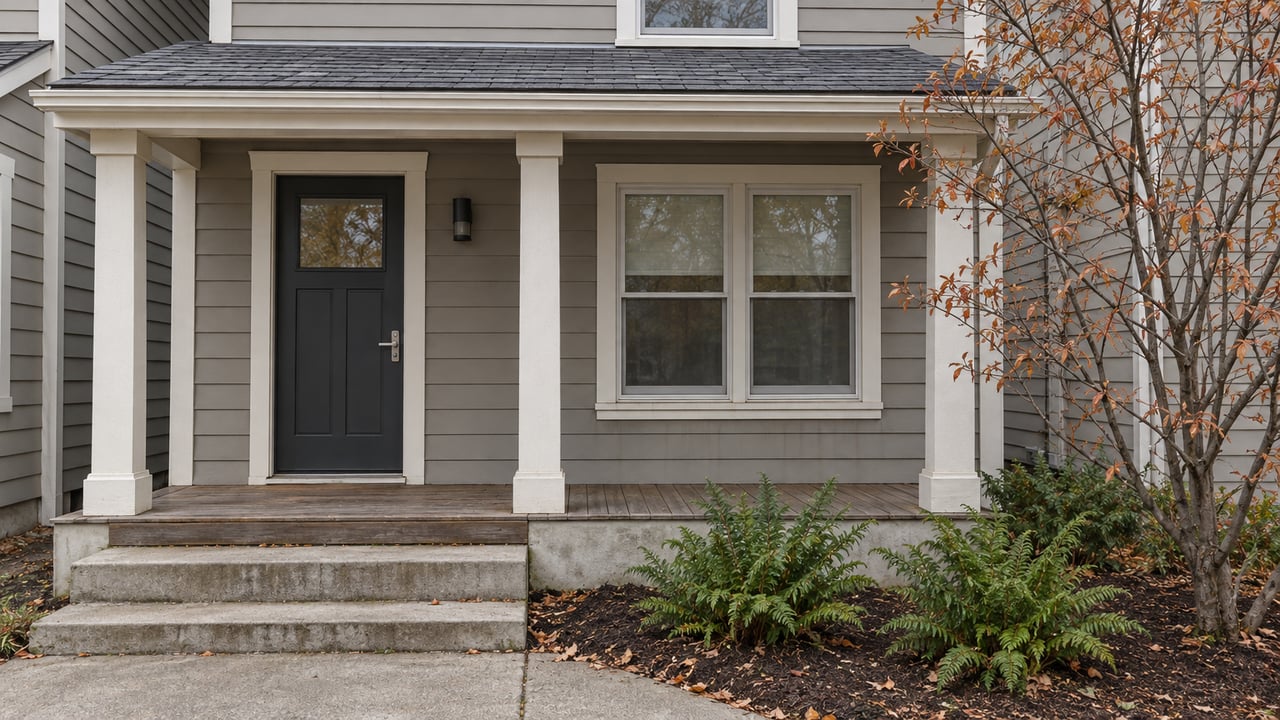
Williston Has Price-Capped Homes Coming. Why Is the Math So Hard to Make Work?
October 29, 2026
October 29, 2026
In April 2025, a home in Williston's Northridge neighborhood sold for $751,931. On paper it was one of the town's permanently affordable homes, with a maximum sale price of $456,500. Both numbers come from the Town's own July 2026 affordable housing monitoring memo. The sale was within the rules. The covenant on that home let the developer sell at the cost of building it, even when that cost went past the affordability cap.
Williston has since removed that option. The next round of price-capped homes for sale in town has to sell at prices a median-income household can actually pay. That's good news if you're a first-time buyer watching Williston. It also explains why those homes are likely to show up slowly. The cap now has teeth, and construction costs haven't come down to meet it.
Northridge got final approval in 2018 and was required to include nine homes affordable at 100% of area median income, or AMI. Here's what the Town recorded when those homes changed hands:
| Date sold | Max affordable price | Actual sale price |
|---|---|---|
| Jan. 2022 | $460,487 | $420,000 |
| Oct. 2022 | $423,467 | $436,732 |
| Nov. 2022 | $509,889 | $508,132 |
| Nov. 2022 | $381,729 | $378,660 |
| Dec. 2022 | $423,467 | $399,673 |
| Apr. 2025 | $456,500 | $751,931 |
| June 2025 | $409,500 | $550,000 |
Most of the 2022 sales came in at or under the cap. The two 2025 sales went well over it. The memo spells out what changed in between: building materials, labor and financing all got more expensive, and mortgage rates more than doubled during 2022 to just over 7%. As the memo puts it, higher rates "effectively lower the sales price that is 'affordable.'" When the cost of building climbs and the affordable price falls, the "sell at cost" clause stops producing affordable homes.
Under Williston's current bylaw, homes promised as affordable "must be sold at a price that actually meets the affordability threshold." Town staff wrote that this "will be very challenging to achieve in the current environment." They cited an average residential construction cost of $375 per square foot, as quoted by the nonprofit developer Evernorth.
The Town checks each affordable home sale against the Vermont Housing Finance Agency's affordability thresholds in effect when the home sells. VHFA's 2026 figures, effective May 1, 2026, list these affordable home costs for Chittenden, Franklin and Grand Isle counties:
| Home size | 80% AMI | 100% AMI |
|---|---|---|
| 2 bedrooms | $282,000 | $352,500 |
| 3 bedrooms | $325,500 | $407,000 |
| 4 bedrooms | $363,500 | $454,500 |
At $375 a square foot, a 1,000-square-foot two-bedroom costs about $375,000 to build before anyone pays for the land. That's already more than VHFA's $352,500 figure for a two-bedroom at 100% AMI. VHFA uses these figures to set subsidy limits, and each project's exact price limits come from its own approval and covenant terms. A builder who has to sell some homes at these prices covers the gap with the market-rate homes in the same project, with outside money, or by building more slowly. For 2026, VHFA puts 100% AMI in Chittenden County at a household income of $123,400 and 80% AMI at $98,720. HUD's FY 2026 income figures give the same $123,400 median family income for the Burlington-South Burlington metro area.
Williston has approved two projects that are required to include owner-occupied affordable homes:
None of these 55 homes falls under the old sell-at-cost covenant. All of them have to clear the real cap.
Timing is the part to watch. Summerfield was listed as under construction in the March 2026 Development Review Board minutes. At Windswept Meadows, the Town's development page shows that Rivers Edge Building Development, LLC had a permit for Phase I infrastructure, but no dwelling permits had been filed as of February 25, 2026. That project also runs on a built-in speed limit. Under the Glaser Specific Plan, once final plans are approved, the builder can get permits for up to 18 new dwellings per fiscal year until the project is done. In August 2026, the applicant asked the board to remove one single-family lot, which would take the total from 107 homes to 106.
For years, residential builders in Williston competed each March at a Growth Management hearing to win the right to build. This year no one entered. The March 2026 DRB minutes say it was "the first time since the WDB was adopted in June 2008" that the board had no Growth Management hearing at which to score and allocate projects. In the 2000s and early 2010s, by contrast, projects were denied or had to compete across several years.
The reason is a trade built into the bylaw. Under Chapter 11 of the Williston Development Bylaw, a project that includes enough affordable homes skips the growth contest entirely. Projects with 10 or more homes meet the requirement in one of three ways: 10% of homes at 80% AMI, 15% at 100% AMI, or a combination. The bylaw's own example is a 60-home project, which could be 54 market-rate homes plus 6 at 80% AMI. One of the two projects eligible this March, 9 homes at 35 Caroline Court, chose that inclusionary path.
That means the price-capped homes are now the main way new neighborhoods get approved in Williston. How fast they get built depends on the cost math above. Williston permitted 92 dwellings in fiscal 2026, above its ten-year average of 76 but below the medium housing target of 128 for that point. A 66-unit apartment building at the Annex accounts for much of that year's activity. The July memo says plainly that new home development "has stalled in recent years due to unfavorable economic conditions."
Town staff have two ideas on the table. One is requiring builders of inclusionary for-sale homes to partner with an affordable housing developer such as Champlain Housing Trust, which would bring in outside funding. The other is using the state's new Community Housing and Infrastructure Program, which pays for the infrastructure a development needs out of the tax increment that development creates. As of the July memo, neither was in place.
These homes come with a permanent price limit. The bylaw defines affordable as priced so a household at or below 100% of area median income spends no more than 30% of its income on mortgage, property taxes, HOA fees and insurance. That restriction carries over to every future resale.
Who enforces it matters. Housing Vermont, now Evernorth, used to monitor Williston's town-required affordable homes and stopped several years ago, so that job now belongs to the Zoning Administrator. Champlain Housing Trust already handles nine owner-occupied homes at French Hill Manor and three other shared-equity homes in town. In CHT's shared-equity model, the owner has to live in the home and sells it back through CHT to another qualified buyer. The seller keeps the principal they've paid down, the value of approved improvements and 25% of the appreciation. The rest stays with the home to keep it affordable. CHT's eligibility page lists income and asset limits, mortgage qualification, homebuyer education and no ownership stake in another primary residence. Unless an outside organization takes on that role, monitoring of the Summerfield and Windswept Meadows homes falls to the Zoning Administrator, and no outside partner has been named for either project.
This is general information, not legal or financial advice. Covenant terms vary from home to home, so have your attorney and lender walk through the deed restrictions on any specific property before you commit.
Seven Days reported in late September that Vermont had nearly 3,000 active listings in August 2026, the most since 2020. The median time on market had risen to 17 days, and even in Chittenden County, homes getting more than a few offers were now the exception. The statewide median sale price was $450,000 in August 2026. In Williston, the Town's numbers for sales through early 2026 show a primary-home median of $550,000, up from $360,000 in 2019.
That gap is the reason these homes matter. VHFA's $407,000 figure for a three-bedroom at 100% AMI sits well below what the open market has been charging in Williston. Renting nearby while you wait also has a known cost. In October 2026, Finney Crossing advertised one-bedrooms at $1,850 to $1,900 a month and two-bedrooms at $2,350 to $2,750. Its new 92 Alpine Drive building in the Annex is planning to open March 1, 2027.
Are the Annex's affordable homes for sale? No. The Annex's 28 required affordable units are rentals at 100% AMI.
Can a capped home ever sell above its limit again? Under the current bylaw, the sell-at-cost provision no longer exists. Future affordable homes have to sell at a price that meets the threshold.
Do the VHFA limits tell me how much I can borrow? No. VHFA says those prices are used to set subsidy limits, not to prequalify or approve loans.
If you're a first-time buyer trying to decide between waiting for a capped home at Summerfield or Windswept Meadows and buying on the open market now, idENTITY real estate group can help you run both sets of numbers side by side. We'll look at the income limits, the resale terms and how the timing fits your plans. Get in Touch.
Stay up to date on the latest real estate trends.
We combine local expertise, strong communication, and thoughtful strategy to create an experience centered around your goals. At idENTITY real estate group, you’re never just another transaction — you’re part of the community we care deeply about.
idENTITY real estate group
[email protected]
(802) 999-8410
68 RANDALL ST
SOUTH BURLINGTON, VT 05403